

Is fishing cool?
And is that really the point?

Growing up in an unremarkable town in middle England in the 1990s, I can categorically tell you that fishing was not cool.
Volkswagen Golf GTIs were cool. Britpop (Oasis, Blur et al) was cool. Skateboarding was cool. Fishing was something your dad or grandad did to get out of the house for most of Sunday while your mum whipped up a roast dinner and did the housework. Not cool.
When I came to fishing in my young adulthood, shaking that image of fishing being a boring, stuffy hobby was quite difficult. I liked the idea of being outside, I liked the idea of trying to outwit wild (and not so wild) animals, and I liked that you could buy a wide array of gadgets and gizmos to do it. But it still felt pretty uncool to my young and foolish mind.
Thankfully, a trait I’ve always been blessed with is not really giving a s**t what other people think about me, so I began to enjoy fishing. It slowly became an integral part of my life and also my career (I spent a decade working as a journalist on fishing industry magazines), but deep down, it still never felt like it was cool. The mere mention of it among my peers was usually enough to turn noses up, to invite confused looks of suspicion, and for the conversation to quickly move on to something more interesting.
I didn’t mind; fishing was a place where I went for relaxation and enjoyment, and also to challenge myself – who cared what other people thought about it?
I went about the next 20 years happily fishing away, not really even thinking about the social status of the hobby, which is probably how its sudden rise managed to creep up on me. I was a hungry trout focused on the next fishing trip coming down the river, not noticing the crafty fly angler crawling through tall grass on the opposite bank, ready to cast the Mainstream Dry Fly right over my nose.
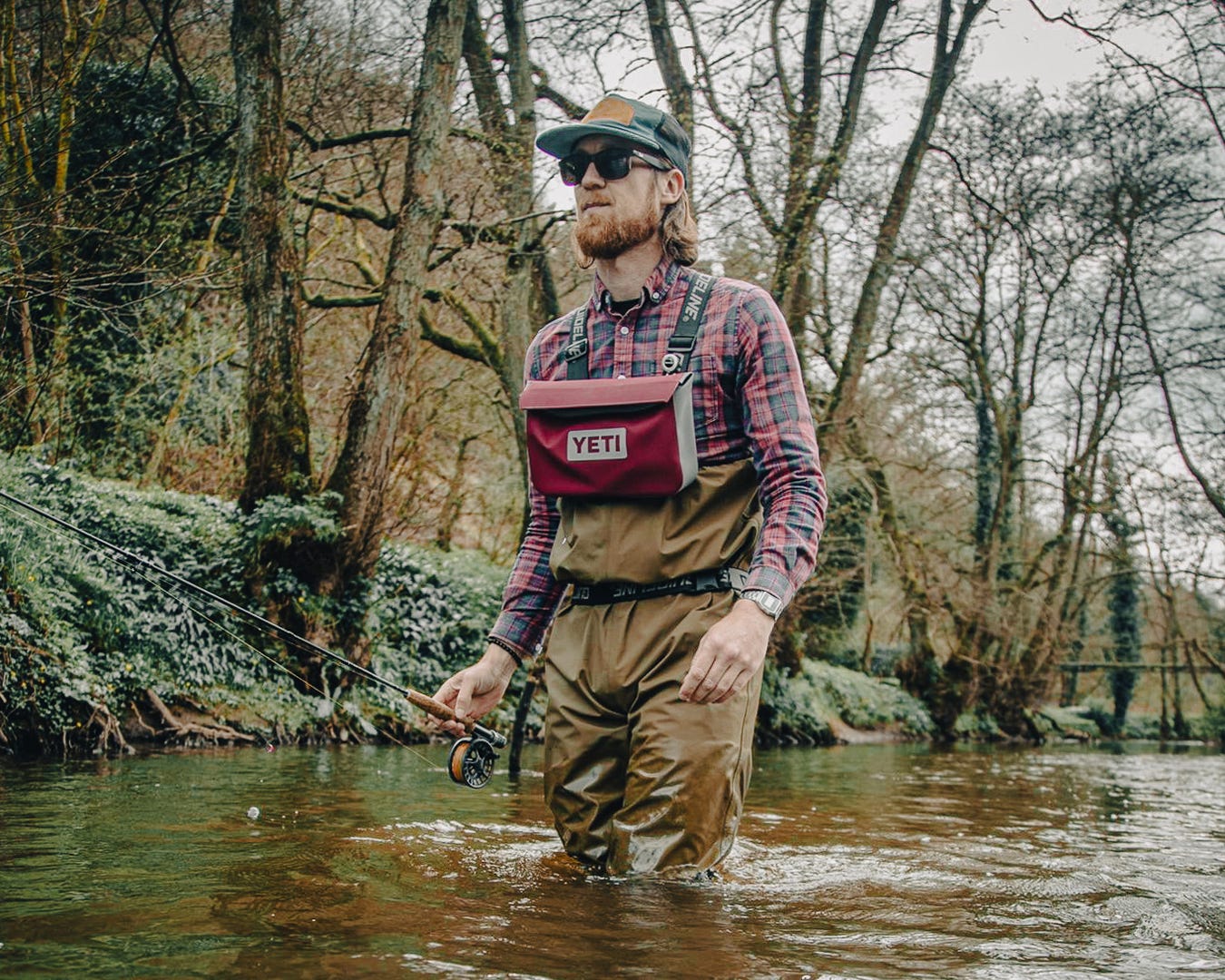
As with most things in the 21st century, the first signs of fishing becoming a desirable pastime for the masses began to appear on social media. It probably started when general outdoor industry brands with some fishing pedigree (think Yeti, Patagonia, Columbia, etc) began to show a stronger affinity with the sport. It was another excuse to be outdoors and use their products, but now people were no longer being turned off by angling imagery; they were saying: wouldn’t it be cool to try that? Then came the collabs…
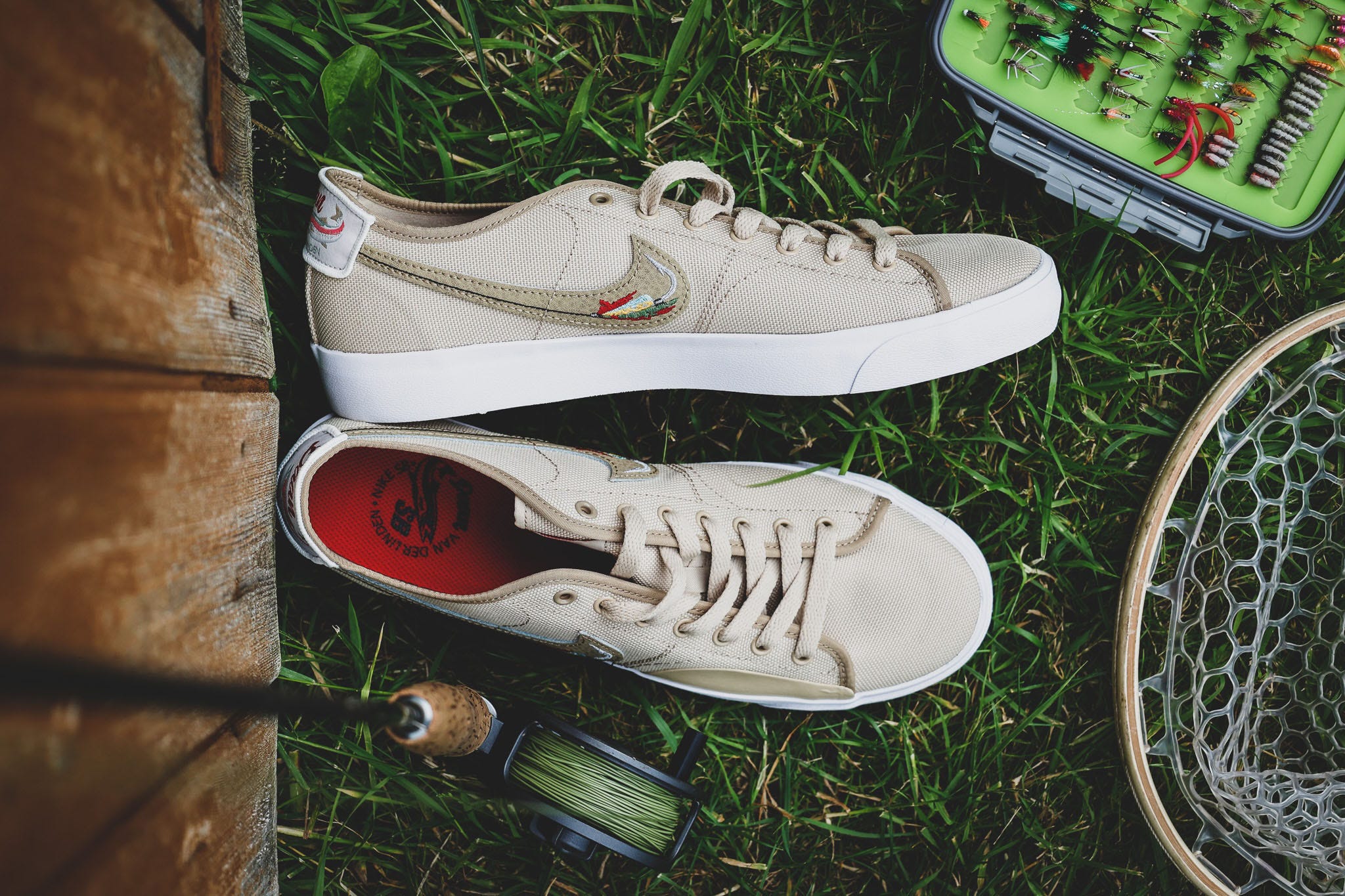
Fashion and apparel brands caught the scent of what was happening and began releasing limited runs of partnerships with fishing brands and even their own gear with fishy themes. I’m not ashamed to say that I rushed out to buy a pair of Nike SB Blazer Court sneakers when they released a fishing-themed Daan Van Der Linden collab.
Before I knew which way was up, one of the UK’s most popular TV shows was Mortimer & Whitehouse: Gone Fishing – a charming, wholesome light-entertainment show following two of the country’s best-loved comedy actors as they… just went fishing. No gimmicks, no fishing wrapped inside another topic: just two blokes fishing and talking about real stuff. Who would have believed this in the 90s?
The phenomenon of fishing going mainstream is not a UK-exclusive event. In the United States, where access is far superior to my homeland, the sport has always been skirting around the edge of the mainstream like a hungry musky circling a ball of terrified baitfish. The American outdoors has always had an allure that is hard to resist, and in recent years, fishing has become a core part of that.
The most recent statistics on angling participation in the United States point to a hobby that is certainly riding a wave of interest. According to data from the American Sportfishing Association (ASA), 57 million Americans went fishing during 2025. Not only is this 18 per cent of the country’s population, but it’s also up 25 per cent from a decade ago. Of that 57 million, 6.3m were first-time anglers (and we can presume a hefty chunk of those were hipster moths drawn to the fishing flame), 5.4m were aged 13 to 17, 21.1 million were women, 6.9m were Hispanic, and 6m were black. Those latter two stats are all-time highs.
Fishing now (especially fly fishing) seems to be rubbing shoulders with giants such as hiking, rock climbing, and mountain biking. It’s an attractive outdoor hobby that many people now aspire to try. But how did this happen?
There are many industries that actually have Covid-19 to thank for their current state of popularity, and fishing is no exception. People wanted to get the heck out of their four-wall confinement and do something outdoors in the immediate aftermath of the pandemic, and fishing was one of many things they took to.
But for figures like those quoted above from the ASA to be maintained, once people were hooked, they had to stay hooked. And the reason that happened, in my opinion and hopefully that of anyone else who loves to fish, is what it does to your mind.
In case you missed it, there’s somewhat of an analogue revolution going on. People are sick of screens, tired of being online, and fed up with not feeling properly connected to the people and places around them.
Fishing gives you time and space away from the internet. You can spend hours fully engaged in a challenging and rewarding activity that gives you a more natural and healthy serving of dopamine than any digital device ever could. Not only that, but now you can do that and be considered to be doing something as cool as thru-hiking or wild camping. But that’s not really the point.
As a latecomer to the sport, my view on why fishing seems to be more popular than ever is that once you try it, you have a completely different view of it. And once you understand something, you appreciate it. The whole world seems to understand fishing a little better than it did a few decades ago, and if that makes it cool, then so be it.